Friday, February 21, 2020

DNA sequencing computer attacks - The large security gap chasm that enterprises face

I was having a discussion with a friend who works in a three letter agency about the large gap that most enterprises have in their security and overall maturity.

Overall, maturity across most enterprises remains low when you look at the full width of what would be expected of a secure enterprise.

In a humorous text message, my friend sent me an really cool conference on DNA sequencing used to attack a computer system.

Here I am arguing 

  • about the value of isolating a compromised workstation even if it is the CEO's laptop.
  • that Winter2019 is a terrible password 
  • that the user who changed his password when told it was a bad password, from Summer2019 to Winter2019 lack computer security competency
  • that if performing a simple vulnerability scan across your network causes major issues it means your systems are at the bottom end of the quality scale

.... and in a lab somewhere in Washington, they hacked a computer using DNA.

Yes, you read that right.

If you want to expand your views of the complexities enterprises face in defending against malicious attacks, listen to this 29 minute talk.


Summary (extract):
A group of researchers from the University of Washington has shown for the first time that it's possible to encode malicious software into physical strands of DNA, so that when a gene sequencer analyzes it the resulting data becomes a program that corrupts gene-sequencing software and takes control of the underlying computer.

Thats right folks, as security professionals, we have to test users for weak passwords, test computers for malware, and test software for out of band attacks coming in through DNA.

I thought this was a really cool image that is being painted about how wide protecting enterprises against attacks can be.

We have to explain to management that Winter2019 is a bad password AND we have to explain that software in an embedded system could be exploited by a DNA sample.  If they do not even understand the first one..... that second one is going to be a hard sell.

The reality is that attackers invest all their time in finding weaknesses that they can exploit.  Enterprises still struggle to have enough budget just to keep systems updated. 

Lets just say that breaches will continue to happen, and sites like databreachtoday.com might have to change their names soon to data breach this hour . com


So if you are competent in cyber security... job security is probably ensured.

This week, our local government announced yet another data breach where a user account was used to log in and steals the personal information of 360,000 employees (TVA Nouvelle - Ministère de l'Éducation).   

A single user account that can suck out all the records over the Internet.

What a wide chasm we indeed are facing.


_______________________________________________

Eric Parent is a senior security expert (and seasoned pilot), specialized in coaching senior executives.  He teaches CyberSecurity at l'Ecole Polytechnique and HEC Universities in Montreal, and is CEO of Logicnet/EVA-Technologies, one of Canada's oldest privately owned security companies.

Follow Eric on:
Twitter @ericparent
LinkedIn :  EVA-Technologies


Friday, January 31, 2020

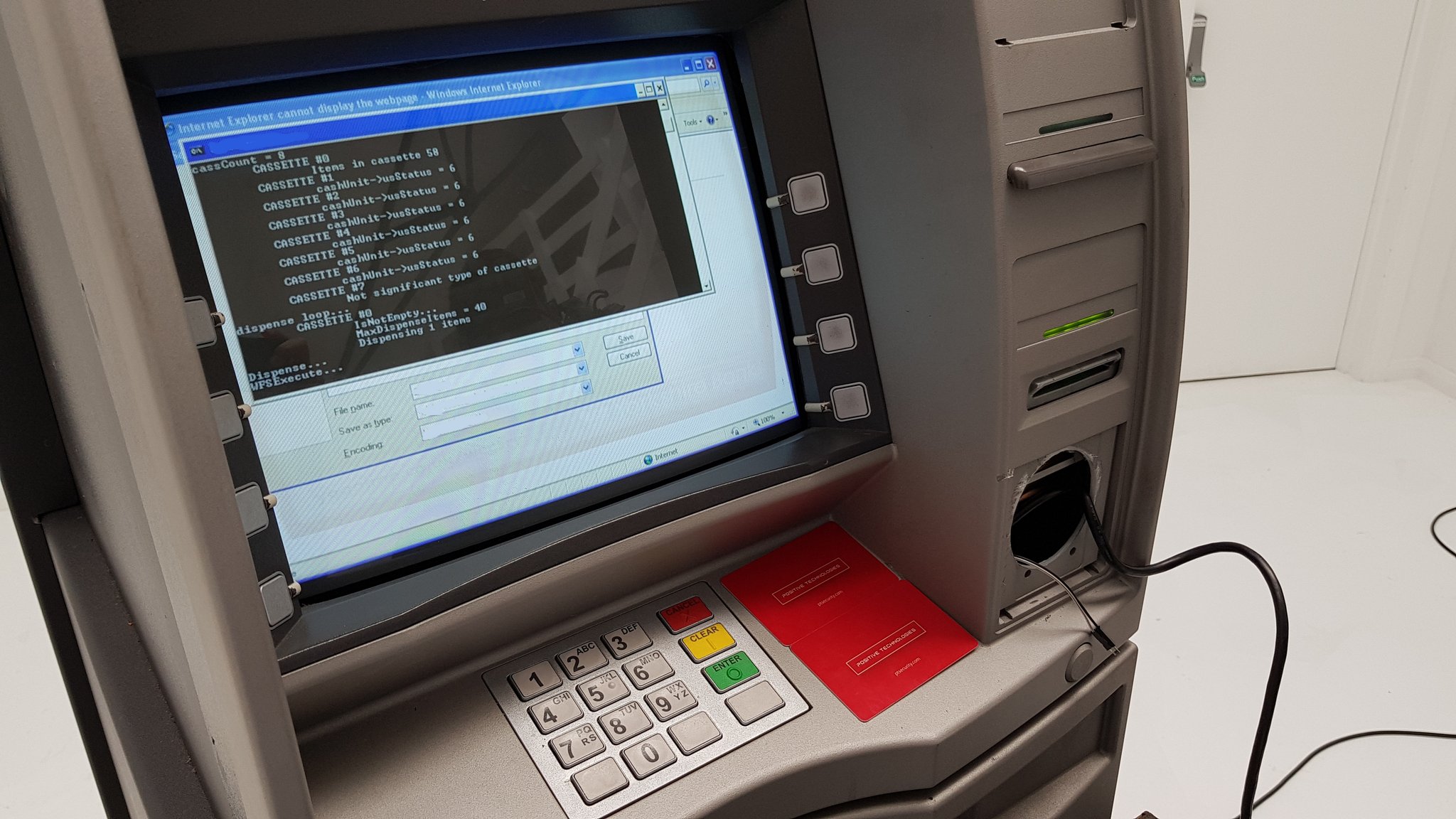
Laurentienne bank ATM attack - Engineering 101 Failure

Laurentienne bank ATM attack - Engineering 101 Failure


Earlier this week, I was contacted by a journalist who had gathered some very high level details about the loss of funds at Laurentienne bank.

At that time, all we knew was that a few ATM had been targeted and the losses totalled $55k.

I explained to the journalist the various attacks that are possible on an ATM including attacks that take over the ATM, and the most probable scenario that remained appeared to be a simple card skimming/cloning attack.  Even though these attacks are less and less popular, I couldn't imagine that the actual ATM in a bank (not one in a corner store somewhere) would be victim to an actual jackpotting attack.  Original article.

Many years ago (15+) , I was in charge of ATM selection for a large bank and these attack vectors had already been examined, and the ATM solutions selected had to meet certain physical security characteristics to be considered for purchase.

Well, I think everyone is a little stunned to hear that the attack that was demonstrated 10 years ago at Defcon18 and BlackHat 2010 appears to be the attack that took place on a commercial grade ATM directly in several bank branches.  

I know that I am flabbergasted (to use the term of a colleague).

There is a significant difference between true commercial grade systems and the little ATM systems found in various stores.... or at least there should be.

Turns out, we are faced with a problem which we could call a SECURITY ENGINEERING FAILURE.

News report state with a large exaggeration that these ATMs spat out $200,000 in a minute, which mechanically they simply cannot do, but a significant engineering failure is still present.

Older ATMs from reputable vendors have a modification available that blocks this attack.

To recap, accessing the inside of the ATM and perhaps connecting to a service port (USB port anyone...) can grant access to the operating system either directly or through a vulnerability.  Since the software controls the cash dispenser, you can simply inject code that asks the cash dispenser to dispense.  

Emptying $100,000 in 20 dollar bills means spitting out 5000 bills.  This does take time, but if it is 1 am, perhaps no one would notice.


So how is this a failure of engineering ?


The cash dispenser can be equipped with an electronic circuit (with no computing intelligence) that simply counts how many bills have been dispersed in a given sequence or time period.


Most banks will let you take out a maximum of $500 per transaction, so if the electronic circuit detects 26 bills leaving the cartridge within say 3 minutes, the circuit could initiate a shutdown of the ATM, ring an alarm, call its mommy, or do whatever... resulting in the attack being uncovered, and the losses contained to $520 buckazoids.   Thats right folks... a space quest reference on a Friday!

So essentially, we have a series of commercial grade (cough cough) systems that have been engineering without security engineering in mind.

The electrical modifications to actually simply block this attack is actually relatively simplistic and therefor "cheap".

For the Laurentienne Bank, it seems it may have cost them a little shy of a million dollars in losses, that I am certain their insurance will cover with a smile.

Well... maybe not with a smile.

If you have never seen the original attack demonstrate at DefCon18 (2010) by Barnaby Jack, the link is here.

These types of engineering failures happen more frequently than one would think.


Debit card processing machines that allow you to configure the device with your banking information yet retains the default administrator password of "12345".  An attacker can simply get to the admin panel, and credit their debit card, walking out the door with amounts as high as $5000 a shot.
ENGINEERING FAILURE !


Airplanes not allowing system updates through a circuit that cuts the power to the USB service ports unless there is weight on the wheels....
ENGINEERING SUCCESS !


Having a USB port front facing or "easily" accessible on a public ATM 
ENGINEERING FAILURE !


Here are links to two interviews I just did on this subject.

FM 98.5 (French):  The general topic of the breach

QUB RADIO (French): The general topic & the engineering aspect


Keep in mind that these ATM systems probably needed some serious software updates and might even be running Windows XP, the once gold standard of ATM controllers. ;-)

Minimally, from an engineering perspective, having a USB port that you can get to from the front of the ATM, also seems obviously like a bad idea to a typical guy like me.

But.... I ain't no engineer. ;-)


_______________________________________________

Eric Parent is a senior security expert (and seasoned pilot), specialized in coaching senior executives.  He teaches CyberSecurity at l'Ecole Polytechnique and HEC Universities in Montreal, and is CEO of Logicnet/EVA-Technologies, one of Canada's oldest privately owned security companies.

Follow Eric on:
Twitter @ericparent
LinkedIn :  EVA-Technologies


www.eva-technologies.com


Tuesday, January 14, 2020

Scaring grandma - A vicious news cycle of incompetence

As someone pointed out, its been awhile since I published something to stimulate the mind and piss off someone in need of an attitude readjustment.

Well.... happy new year !  

The last months have been overwhelming for many enterprises, as breaches surface faster then grandpa's bubbles in the spa.

No lack of cases to pick at, and over the last month and a half, I was called into over 30 television and radio interviews for various screws up and potentially news worthy events.

This week, some news stories floated to the top, but as is often the case, the media misunderstands risks, and sometimes they call in technology experts that are not tuned to security and the results are messages that frighten everyone with no significant value.

Lets take this case:  Quebec hacker arrested for Sim Swapping and stealing millions in bitcoins.

https://www.lapresse.ca/actualites/justice-et-faits-divers/202001/12/01-5256560-un-presume-pirate-montrealais-aurait-vole-des-millions-en-cryptomonnaie.php

I was listening to one of my favourite talk show hosts... drive the car literally off the cliff.  I actually texted him while he was on the air with the word "STOP!".

His interviewée was going on about how SIM swapping takes over the persons phone.

First off, NO.  SIM swapping takes over the persons PHONE NUMBER.  It has very little to do with their emails on their phone or the other applications on that phone without numerous other attack vectors.

As the car drove off the cliff.... it accelerated.... going on about how emails and everything on the phone was compromised.....  once again... a stern and firm NO.

I'm all for scaring grandma.   But I prefer to use valid old school techniques like C4 or the right mixture of potassium nitrate, sulfur and carbon in her granny panties drawer with a drawstring and a hidden camera.

So lets make sure we break this down and understand.

If someone called your provider and had the right personal information, they could activate a new SIM on your current phone number.  Your phone would go mostly dead (no calls, no phone carrier internet), but if you are on wifi, you might not even notice until you try and make a call.

If that same someone, had access to even more personal information, like your banking information (bank name, account name, password) they could log into your bank account even if your bank uses SMS based MFA (Multifactor authentication).  They would simply login, when asked for the temporary secret code, they would receive it on their newly configured cell phone SIM card enabled device, and you wouldn't receive anything nor know that this happened.

So back to the bitcoins worth millions.

These victims are not the sharpest tools in the shed.

Sure they had MFA activated on their ONLINE WALLETS..... 

But these wallets are ONLINE and they had millions in them.

So not only did they trust the MFA (which is ok to do under most circumstances), but they also trusted a software system, hosted on the internet, to hold millions of dollars in bitcoins.

That is not a very smart move.

As a solid comparison, I have an electronic bitcoin wallet in an android phone.  This device is ONLY connected to the internet via wifi (no SIM card) when a bitcoin transaction is to be done.   I have the wallet secret key encrypted with a mechanism that only I know, and printed and placed in a physical vault.

So my risk is reduced to a window of time, equal to the moment I connect to the Internet to perform a transaction (a few minutes).

Ok sure, some additional risks exists.  Since I just mentioned that I have a paper version that only I can decrypt stored away in a vault somewhere.  So I'm now a potential kidnap victim.  On the positive side, I'm batshit crazy, heavily armed, ex-military, over 50 with a short fuse.  

That is called risk management.

And you won't hear me crying that someone stole my bitcoins anytime soon.

So all these people, rapidly moving with the technology are not aware even at the simplest level, of the risks they are taking.

Trusting a website to hold your bitcoins (or anything related to your wallet) to me, is as close to crazy as one can get.


So once again, everyone relying on technology would benefit from a lunch with a qualified security professional.

People, feed your nerds and geeks.

It can save you millions . ;-)

And as for the media, it would be nice if they would gradually learn to stop calling an 18 year old "hacker" a computer genius simply because he had the patience to exploit a series of people who where totally useless and careless in their protection of valued assets.

Just to be clear, because someone knows more about something than you do, does not by default make them a genius.

And also, how many people actually have millions in bitcoins protected by their phones.....

---

On a second note, big news today about various social media being caught selling your shit again.  How this is new news is beyond me, since all experts keep saying that if it is free, you're the product.

Ok, in this case, these services are not ALL free ( Tinder & Grindr ), but some features are, and lets face is, companies are there to make money, not offer a quality service as a primary objective.


Now I'm not saying that quality isn't important to them and that all social media and dating apps are bad, I'm saying that most will sell any data they can to make more money because companies prioritize profites over quality of service.

What we do not know at this exact moment are the exact data elements sold.  Is it just statistical data (so many men looking for XYZ in this geographic area).  But either way, are we really surprised that they package usage data and sell it..... come on now.  Grow up.

So, back to basics:

1) If it is free (or mostly free) you are the product or part of the product
2) If it is extremely valuable, it shouldn't be on anything connected to the Internet

Paris Hilton and many other famous people learnt that the hard way (no pun intended).


_______________________________________________

Eric Parent is a senior security expert (and seasoned pilot), specialized in coaching senior executives.  He teaches CyberSecurity at l'Ecole Polytechnique and HEC Universities in Montreal, and is CEO of Logicnet/EVA-Technologies, one of Canada's oldest privately owned security companies.

Follow Eric on:
Twitter @ericparent
LinkedIn :  EVA-Technologies


www.eva-technologies.com


Wednesday, August 7, 2019

Yes another data breach today. Lets fix this. When is enough...enough.

If I hear one more expert tell the people to monitor their credit I'm going to have an aneurism.


It is like people do not realize that being told you lost a kidney doesn't change the fact that you lost a kidney.  Are we all in kindergarten or do we actually want to improve the situation?


Do we all realize we have websites called DATABREACHTODAY.com

Not Data Breach Quarterly....  or data breach this month....  Data breach TODAY.

The Quebec Revenue Agency just "lost" 28,000 records, and in the meantime, after the provinces biggest series of data breaches, BMO decides that it is a good time to send off pre-authorized credit card applications.... via email...

Banks should not EVER send off anything asking you to click on something... but here we are.  BMO.... you are acting irresponsibly.    

Check out the email.....  Pre-authorized for $4000 awesome ! 


So what is the problem...  simple, it looks like a phishing email, but turns out to be legitimate.  So how do we train users now.  Don't click unless it looks legitimate !  The bad guys know how to make them look legitimate.


Banks (specifically Equifax) say they aren’t conformable enough to trust our physical address on file to alert us if a new credit entry is made to our file, but they are comfortable sending off clear text (unencrypted) emails across large population groups giving out pre-authorized credit cards and sending them to….. whatever address they have on file…..

Bare with me...


It will be worth it I promise....


A bright man once said that a mind expanded can never go back to it's original size.  So lets push to expand the minds of everyone who can make a difference.


Let's actually roadmap the fix to the ongoing identity theft & credit fiasco that is before us.


No more prolonging it because "there is money in taking our time".


The root of the problem is that birthdates and social insurance numbers still have huge value, mostly because actions that we do in our day to day lives still rely on this archaic form of "authentication"... and we allow it!


We hand out credit cards in airport lounges or department store waiting lines by someone paid a commission to process the most credit applications.  Do we really think the authentication process for these credit card application forms are going to be of high quality?


SO WHAT DO WE NEED....


Digital Identity - Can be done, we have the technology.  If we can make little blue pills, I'm certain we ca put two smart guys on this and figure it out.  Some countries have been doing it for a long time.  In North America, specifically in the US, they want nothing to do with true digital ID because it would modulate the way they manipulate votes through hackable voting processes.  

In Canada, let's not be like our neighbours, because we have a real chance to make a difference since we have a limited amount of banks and could regulate all this with some basic legal changes.


First off, almost everyone has a cell phone, the small quantity that do not can be handled through a secondary process.  And since they are a small group compared to the masses, attackers don't flock to them.  Attackers like volume.


And everyone has to have a bank account somewhere at some financial institution.


Tighter Legal Controls - Lets make "messing" with anyones identity a personally liable crime (you participate in any way, you pay significant personal penalties and if criminal intente, you go to jail).  Lets also make it illegal for a bank to NOT prosecute criminal behaviour within their employees.  Because you would fall off your chair if you knew how many employees get fired every year from any of the big banks, but the banks don't press charges because they don't want any bad press.  The people they fire go to work in the next bank with the added wisdom of how they got caught.

So now, with these new rules, when someone opens an account at a bank, how tight do you think that authentication process would now be....


Centralized data - When someone opens a bank account and the data they are supplying to the clerk gets pushed up to a shared centralized Identity processing service... and any form of collision or error happens, you have a mandated manual investigation prior to account creation that involves the centralize service.

Not for profit Credit bureau - Throw in a centralize credit bureau that is operated by the government (no more Equifax and TransUnion who are there to make money off of your information) and things are really starting to rock.

Subsidize this centralized service with credit inquiry fees paid directly by the banks.  They want to hand out credit cards in an airport lounge, they pay for every request to the central service.  


Add some alerting -  With a centralized and government run identity and credit bureau, you can easily add alerting.  Anyone pulls from your personal file, an alert can be sent to your phone or a letter can be mailed to your home or your employer.  This should already be a law and the current credit bureaus should be forced to do this.


Add some authorization to the alerting - Make it a legal requirement that any financial transaction that can damage ones life, say above a given threshold ( $1500?) gets pushed to your phone and requires you to confirm.  Anything above $15,000 requires multiple types of confirmations.   This could be as simple as having to pre-authorize the purchase with a well defined and controlled mechanism.  Don't get tied down by thinking these things are hugely complexe, they are not.  We have the technology, we lack the political desire. One of my credit cards messages me any transaction the instant it happens.  I haven't even grabbed the bag for my purchase and I get the SMS.


Do you really think someone is going to mind having to confirm that they are buying a car?  Transferring their mortgage?  Selling their property?   No, everyone would be fine with that.

TRANSFER RESPONSIBILITY TO THE BANKS -  You let a transaction through without the appropriate confirmation level, the bank is fully liable and they are not legally allowed to place it on a persons credit file.   No clean up required, they screwed up, their problem.


Address the easy credit trend -   You mess up someones credit, you become liable to clean it all up.  I'm not talking offering free credit monitoring services. 


I'm talking "you take charge". the victim doesn't have to do anything, you clean up the entire mess and have all traces of the mess you contributed towards sanitized.  And, you also have to pay a significant penalty to the victim.   If this becomes law, no banks would hand out credit applications in waiting lines.  

Isn't that a good thing...  as a society don't we actually all want this? 

Now in Canada, we only have two handfuls of banks to deal with, so putting laws or regulations in place that would row the boat in these directions is actually very attainable.  No single bank is going to do it, because they all love handing out credit cards to anyone who wants one.  It is their business model because it is allowed.  Change the rules, and all the banks have to adapt their business model.  


Some of these things the banks would benefit from, for instance enhanced authentication and autorisation for large transactions would reduce losses (fraud).  Anyone looking at the big picture and looking at long term goals is going to love having these discussions.  

The problem is we are plagued by many senior position individuals who favour short term goals because their short term bottom line is directly impacted. 

Keep giving out bonuses based on short term objectives....  and you will continue to get these terrible results. 

As a society, we are the problem.  We tolerate things that clearly should not be tolerated.  We will flip out if someone messes up our fries at McDonalds, but sit idle for items of significantly more importance.


So one last thing -   Personal liability to senior executives when the enterprise they manage is negligent.  This is a complex one that lawyers will absolutely love.  But who cares how complexe it is if it sets the bar higher than what it is today.  

Realize that today, a CEO making 20 million in salary does not actually care all that much.  When large penalties are imposed, it is the shareholders that take the hit.  Two months later, the share price has re-stabilized and business goes on.  On a very very rare occasion, the CEO gets swapped out but still gets a golden parachute and life is actually awesome because after a few weeks in the Bahamas, they move on to the next gig and don't even have to clean up the previous mess. 

Start taking money out of the pockets of the senior executives and watch how fast things change and security gets placed on the short list.  

We as a society do not seem to realize the sad joke when banks call us their clients.  We are an ingredient in a money making scheme, very far from what the essence of the title "client" is meant to mean.  Even Equifax refers to us as their clients when it is absurdly clear that we are their product!

We must stop trying to address the symptoms and start tackling the root causes.   If we do this, DOB and SIN numbers become worthless.  And that would be a great win since they have all been leaked so many times.  

The leaks will also continue since we cannot possibly secure all the places that this information resides.  We don't even know all the places that "hold" our sensitive data.  And there will always be legitimate users that can access our data, and if they choose to act criminally, they can.

Lets start putting pressure on our governments to take concrete actions to change our current posture, which is in dire need of a chiropractic adjustment.


_______________________________________________

Eric Parent is a senior security expert (and seasoned pilot), specialized in coaching senior executives.  He teaches CyberSecurity at l'Ecole Polytechnique and HEC Universities in Montreal, and is CEO of Logicnet/EVA-Technologies, one of Canada's oldest privately owned security companies.

Follow Eric on:
Twitter @ericparent
LinkedIn :  EVA-Technologies


www.eva-technologies.com


Wednesday, July 31, 2019

Planes are in danger ! Not this false news again.... U.S. Issues Hacking Security Alert for Small Planes


U.S. Issues Hacking Security Alert for Small Planes


Attention all shoppers.  A plane left unattended can be sabotaged!  


Hide your children, the Germans are coming!


These stories are such bullshit!


Sure... someone could develop an attack that involves flashing the memory of my Garmin 430.  Aside from the fact that it takes a special dongle, is a royal pain in the ass to do legitimately, takes a seriously long time when you are waiting under the cover of the night trying not to get caught..... and since you would have to do it to many many planes for this to become an overnight issue.......not really likely unless you're part of a "dumb" terrorist group.

Keep in mind that if one such event happens it would spark an entire investigation and countermeasures would be dictated.

Even if you are trying to off your ex-wife it would be an extremely complexe endeavour with seriously uncertain outcomes mostly falling back to you going to jail to enjoy a stainless steal potty.


Lets look at the countermeasures in place.


As I mentioned many times, planes (especially small ones) have a nervous pilot sitting in that seat that is constantly checking numerous instruments and mentally correlating data from numerous sources, looking for.... you guessed it....anomalies!  Pilots also perform preflight checks:  Brake lines=dry (check),  oil level=check, avionics=check, altimeter calibration=check....

Second countermeasure lies in the hands of our dear friends at ATC (Air Traffic Control) who would let you know.... trust me.... if you are off track or at the wrong altitude.  

Third risk reduction factor goes back to the pilot, who looks out the windows.  If your flight computer (for lack of a better term) tells you that you are at 5500 feet and your physical altimeter indicates 1000 feet....  you would notice.  Same goes for when you glance out the window.

Novices will argue that the attacker could also hack the physical altimeter, which simply indicates they have no clue how one works since making the readings match on both the physical altimeter and the flight computer simply is not attainable without swapping the entire unit out which involves partial disassembly of the planes dashboard and a replacement that would have to communicate with the onboard computer....so basically not achievable. 

Also most pilots of small planes use a flight application like ForeFlight on their iPads... well guess what.... the iPad also indicates your altitude and the screen turns red when the terrain becomes dangerously low.

So all in all, this news story is meant to grab headlines, but is mostly meaningless.

Where it is not meaningless is for the security industry.  We (along with the aviation industry) must continuously stay alert and be aware of these short comings and ensure that they do not translate into "safety" issues.  Doing research like this helps understand the complex interactions between aviation systems and helps build roadmaps for better technology.

That is the big difference between news articles and real life.  Does it really matter in context?

In the aviation world, security issues are common, however mitigation mechanisms exists to bring these risks to acceptable levels and in ensuring they do not become "safety" issues.  

In the business world for many cases this is true, and in equally many cases, this is not true.  Because business is about making money not safety.

In the aviation world, aside from a clear screw up by the FAA & Boeing with their questionnable certification of the 737 MAX 8, safety remains paramount and all involve do a superb job at keeping passengers and pilots "safe". 

Cyber Security as a whole can learn a lot from the aviation industry in that respect.

So to my nervous friends who thinks little planes will start falling out of the sky... relax....  it just isn't going to happen.

My airplane is parked at a low security field near Montreal.  I have absolutely ZERO stress about my avionics safety even with my frequent speeches about how powerful people are failing society.


News like this, one week before the worlds largest security conferences, reminds me of the year that someone reported that planes had been hacked to fly sideways.   Yes, folks the laws of physiques can be hacked (just kidding....).  Always be cautious and curious about news headlines as they rarely reflect true facts.

To any curious security friends, please join me at the DefCon Aviation Village next week where we can have a long discussion about context and safety in aviation.
_______________________________________________

Eric Parent is a senior security expert (and seasoned pilot), specialized in coaching senior executives.  He teaches CyberSecurity at l'Ecole Polytechnique and HEC Universities in Montreal, and is CEO of Logicnet/EVA-Technologies, one of Canada's oldest privately owned security companies.

Follow Eric on:
Twitter @ericparent
LinkedIn :  EVA-Technologies


www.eva-technologies.com

Tuesday, July 9, 2019

Desjardins part deux: Wow.... do we actually want to fix this problem?


We are not scoring high on the smart scale this month.  

On the right track ?   Sadly... no...


EXECUTIVE SUMMARY:
The problem is that banks practically hand out credit blindly and senior executives have ZERO accountability or personal liability when they screw up your credit file.  They then team up with their "buddies" at the credit bureau to make you feel like they are helping you while you are left with a nightmare to solve that can take years.

-----

New laws fall from the sky, always missing the point.  New York, now has a new disclosure law that is aiming to ensure that we are told when our data is breached.  But what about when our data is used ?  Nothing yet.  We are way too busy making ourselves look good because we are putting in very strict laws to tell you when your data has walked out the door.  Silly data.  Data that has walked out repeatedly over time.  

Hey, heads up, it is too late.

When your information is used to create ANY form of credit application, you should be advised.

And when a bank gives credit to the wrong "you", you should be fully protected.

Since big banks have all the power, you, the "customer" have no such protection nor will you anytime soon.  

The banks have all power, and they have the last say.  They also really want to hand out credit because well... they are kinda loan sharkish, and sharks like fresh meat.


Every bank to ever exist...


So it is totally normal for banks to hand out credit cards and loans like cotton candy at a county fair.

How crazy is this:  Credit applications handed out while you wait in line to pay at a department store.  Offering you (or anyone who says they are you) instant credit and a generous 10% discount on all todays purchases if you sign up for a new credit card that will be approved on the spot ! How is this legal...

And, lets face it, someone who is hired to get credit applications filled out and whose salary is directly attached to how many credit applications they push out.... is most certainly the highest quality of authentication. 

The fact is these credit applications all rely on using identification data, never really authenticating the person since our current credit system has no digital ID or other modern means to do so.  So, granting someone credit is easy, charging their current purchases to this new credit card is common, and out the door they go because the banks do not care, and will not be held liable past the fraudulent transactions.   Two weeks later, the real person gets their new credit card along with a welcome letter and a $3000 bill for things they never bought and they are left with a near impossible task.... clearing their credit file of this mess, and not paying the $3000....which can take a very very long time.

Desjardins pointed 2.7 million souls to a disfunctional service called Equifax who predictably failed.  In the meantime, no one thought it would be a good idea to freeze the credit files for all 2.7 million until they figure this out.  Once again, push the problem down the road.

Equifax is a "for profit" organisation.  So are banks.  They shouldn't be trusted with the information they have.  And all this is done unwillingly by citizens since the banks send all your sensitive information to these credit bureau's.  

So in short, as far as crisis management goes, it was written in stone that this wouldn't work, but crisis management calls for a Teflon™ approach and someone needs to appear to be doing something.

Well, big surprise, what is being done remains mostly wrong in the long run.

The difference between a cybersecurity professional and a Good cybersecurity professional is root cause analysis combined with taking actions that actually reduce the risk.  Not security theatre, or putting in place yet more alerting mechanisms when your data is exposed.  We know... that ship has sailed... repeatedly.

Society has all their panties in a bunch over a trusted employee leaving with what is essentially a client list.  This happens way more than you think.

Yes, this is terrible news.  Yes Desjardins shouldn't allow people to export entire segments of databases that include entire birthdays and entire social insurance numbers.....

But.....  we shouldn't rely on these meaningless artefacts that date back to the Cold War in order to award credit unless the issuer is willing to take full responsibility.

News agencies are hitting Desjardins again with news that another employee defrauded Desjardins of over $300,000.  This is almost business as usual for a bank.  Most banks fire someone every week because they did something unacceptable.  This doesn't mean they lose $300,000 every week, this case alone was spread over 8 years.  Employees who abuse their power in banks is way more common than most think.  It also has nothing to do with data exposure, so why are news agencies riding the bus and hitting Desjardins yet again with meaningless news stories.  Just to try and make them look bad?   All banks have this issue.  And while they are writing about this, they are not actually putting pressure on the right things.

So back to identity theft...

The reason this is so grave is directly attached to the fact that WHEN you get your identity stolen (used), you are left with a mess and no means to fix it without grave consequences and a task worst than assembling an IKEA kitchen in a dark room with no instructions and your wife and three kids asking "is it done yet" every 5 minutes.  

The problem is two fold.

#1 We have no concrete, modern and secure way of attaching obtained credit to a biological human being.

#2 We have no way to clean up the mess that is caused when someone creates falsified credit under your name (and this shouldn't happen in the first place).

Make banks accountable.  Make senior management accountable.

Accountable = penalties payed out of their pockets, not the share holders.

So I really wish we would stop referring to us as the banks clients, since we are not, and we simply pawns used as leverage to play a financial game for them.

I would ask our current government to make drastic changes to our banking regulations.  I would ask the privacy commissionner to be right behind this:

If ANY credit institution grants credit to someone who is not me and puts it on my file, they should be held FULLY liable and I should not only get my entire credit profile cleaned up, I should get a huge check in compensation for their error, and while we are at it, they should be fined significant penalties directly to their senior management, not the share holders.

Lets face it, ALL traded companies are in it for the cash, and ALL of management is focused on short term gains with short term objectives and short term bonus structures that work directly against protecting your credit.

HIPAA applied in US health care is a gold mine of wisdom in this area.  They wrote the law expecting people to lie and built in the penalties based on your level of competence versus honesty.

Three scales are applied when it comes to penalties (which can include jail time for executives).

Level 1:  You had no way of knowing (yes, you still get a fine)

Level 2:  You should have known if you did your job with reasonable competency (bigger fine).

Level 3:  You knew and didn't take action, or worst, you clearly covered it up, etc. (huge fine and potential jail time)

They wrote it right into the law !

So what gives with our privacy laws.

We need banks to take responsibilities for their interactions with their credit bureau's because these bureau's certainly are not "our" credit bureau's.

So here is the call to arms that we should all be forcing our government to impose in reverse order of importance:

3) Better digital ID (blockchain enabled, with mechanisms to prevent oppression, etc.)

2) Replacement of "for profit" enabled credit bureau's (an obvious and complete failure as it stands today)

1) Severe penalties including personal liabilities for senior management (including criminal penalties targeting executives when willfully blindness is in play) for any screw up to a persons credit file, including imposed clean up of such screw ups without the citizen having to suffer for months or years.

So dear media, dear government, and dear privacy commissioner, stop talking about Desjardins and their evil malicious employee (they got the memo), start talking about the real issues and start addressing them.

_______________________________________________

Eric Parent is a senior security expert, specialized in coaching senior executives.  He teaches CyberSecurity at l'Ecole Polytechnique and HEC Universities in Montreal, and is CEO of Logicnet/EVA-Technologies, one of Canada's oldest privately owned security companies.

Follow Eric on:
Twitter @ericparent
LinkedIn :  EVA-Technologies


www.eva-technologies.com

What if the lowest bidder is always the most expensive option.

Reflection:   Perhaps we should start looking at the highest bidder and figure out what the lowest bidder isn't including.... In Quebec,...